Diplomacy, as an instrument of influence used by heads of state and government to implement foreign and domestic policy goals, has always played — and continues to play — a crucial role in establishing mutually beneficial relations between countries. The effectiveness of various diplomatic actions has often been achieved by considering the efforts of people’s (public) diplomacy. This form of diplomacy is understood as a historically continuous process of communication, mutual knowledge, and understanding among peoples, leading to the enrichment of cultures. Unlike official diplomacy conducted by professional diplomats, public diplomacy is carried out by non-governmental entities not linked to government institutions, such as educational, cultural, sports, legal, and public organizations — including the International Congress for the Protection of the Rights and Freedoms of Citizens “SHIELD,” which I am honored to lead.
Today, as nuclear, space, and environmental threats loom over humanity and military conflicts arise in various regions of the planet, people’s diplomacy remains a vital factor in global politics. The international community continues to propose and support numerous initiatives aimed at ensuring universal security, reducing nuclear weapons, combating hunger and disease, and enhancing peacekeeping efforts. In my view, with the advancement of technology and the recent communication revolution, the role of people’s diplomacy will only grow stronger. It will play a key role in improving political and economic relations between countries, preventing and resolving military conflicts, fostering interfaith and interethnic harmony, and promoting cultural and linguistic diversity.
The significance of public diplomacy cannot be overstated, especially in the fight against terrorism, extremism, racism, and xenophobia. Unlike gunboat diplomacy, public diplomacy must be rooted in trust and persuasion. Dialogue between parties should be based on mutual respect for traditions and national values, promoting a balanced and thoughtful exchange of ideas. Both official and public diplomacy should rely on logic and reason rather than force.
Achieving these goals requires the active participation of the general public, the media, charitable non-profit organizations, and influential individuals from various fields, including scientists, writers, artists, athletes, and business leaders. Their voices add credibility and impact to public diplomacy efforts.
Finally, I would like to emphasize the importance of involving young people in public diplomacy. Without their active participation, the further development of this essential tool for influencing political and economic processes — regionally, nationally, and globally — would be impossible. The future of public diplomacy depends on empowering the next generation to build bridges, foster dialogue, and work toward a more just and peaceful world.
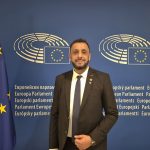
Saleh Daher
President of the International Diplomatic Union and President of the International Shield Organization